
Topic: U.S. House of Representatives
The U.S. House of Representatives has a significant place in Black history, as many notable African Americans have served as members of the House and made significant contributions to American politics.
One of the earliest African Americans to serve in the House of Representatives was Joseph Hayne Rainey, who was the first Black person to serve in the House in 1870. Rainey represented South Carolina and was a prominent figure during the Reconstruction era.
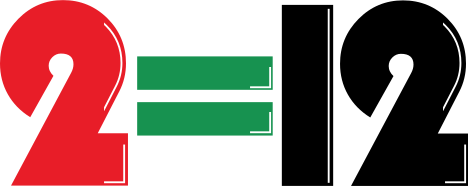
Another influential figure in Black history in the U.S. House of Representatives was Shirley Chisholm. In 1968, Chisholm became the first Black woman elected to Congress, representing New York's 12th Congressional District. She was a trailblazer for women and people of color in politics and ran for President of the United States in 1972, becoming the first African American to seek a major party's nomination for President.
Other notable Black members of the House of Representatives include John Lewis, a civil rights leader who represented Georgia for over three decades and was a key figure in the civil rights movement, and Barbara Jordan, who was the first Southern African American woman elected to the House of Representatives and was known for her powerful speeches and advocacy for civil rights.
Overall, the U.S. House of Representatives has been a platform for many Black leaders to advocate for equality, justice, and representation for African Americans and other marginalized communities in the United States.